
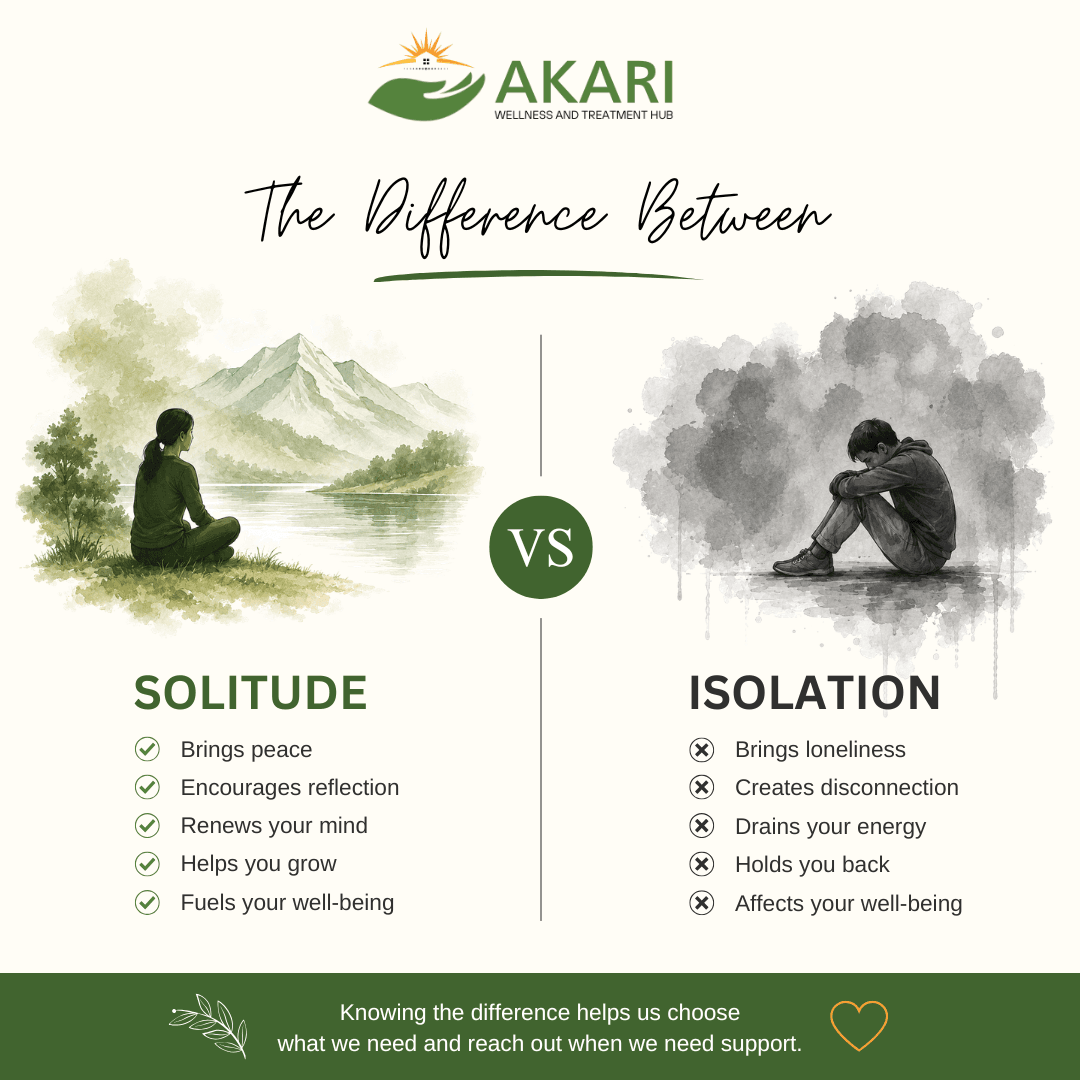
Spending time alone is something we all experience, but not all time alone feels the same. Sometimes it brings peace and clarity. Other times, it can leave us feeling disconnected and overwhelmed. Understanding the difference between solitude and isolation is important because each has a very different impact on our mental and emotional well-being.
The Value of Solitude
Solitude is a choice. It is a healthy opportunity to step away from the demands of everyday life, reflect on your thoughts, recharge your energy, and reconnect with yourself.
Many people find that moments of solitude help them:
- Gain a clearer perspective
- Reduce stress and mental fatigue
- Improve creativity and focus
- Strengthen self-awareness
- Feel more emotionally balanced
Choosing to spend time alone for rest and reflection can be an important part of maintaining good mental health.
When Solitude Becomes Isolation
Isolation is different. Rather than feeling refreshed, isolation often brings feelings of loneliness, sadness, or emotional distance from others. It may happen gradually, especially during periods of stress, anxiety, depression, or addiction.
A person experiencing isolation may begin to:
- Withdraw from family and friends
- Feel disconnected from others
- Lose interest in activities they once enjoyed
- Believe they have to face life’s challenges alone
- Find it difficult to reach out for support
These feelings can become heavier over time if left unaddressed.
A Simple Question to Ask Yourself
If you’re unsure whether your time alone is helping or hurting, ask yourself:
“Is this time alone helping me recharge, or is it pulling me further away?”
If your alone time leaves you feeling calmer, more hopeful, and better prepared to face the day, it is likely serving as healthy solitude.
If it leaves you feeling increasingly disconnected, emotionally exhausted, or alone, it may be a sign that you could benefit from reaching out to someone you trust.
Choosing Rest, Choosing Connection
There is nothing wrong with taking time for yourself. In fact, healthy solitude is often necessary for personal growth and emotional well-being.
At the same time, human connection plays an essential role in healing. When life begins to feel too heavy to carry alone, talking to a trusted friend, family member, or mental health professional can make a meaningful difference.
Seeking support is not a sign of weakness. It is a step toward healing.