
Cravings can feel overwhelming, almost like they take control of your thoughts and actions. For many individuals navigating recovery, understanding why cravings happen is one of the most important steps toward regaining control.
At a professional treatment rehabilitation facility, cravings are not seen as a failure. They are understood as a natural biological and psychological response. The more you understand the science behind them, the more equipped you become to manage them.
What Are Cravings, Really?
Cravings are not just about willpower. They are deeply rooted in the brain’s reward system.
When a person uses substances or engages in addictive behaviors, the brain releases dopamine, a chemical linked to pleasure and motivation. Over time, the brain starts to associate certain situations, people, or emotions with that reward.
These associations are what we call triggers.
Why Triggers Feel So Strong
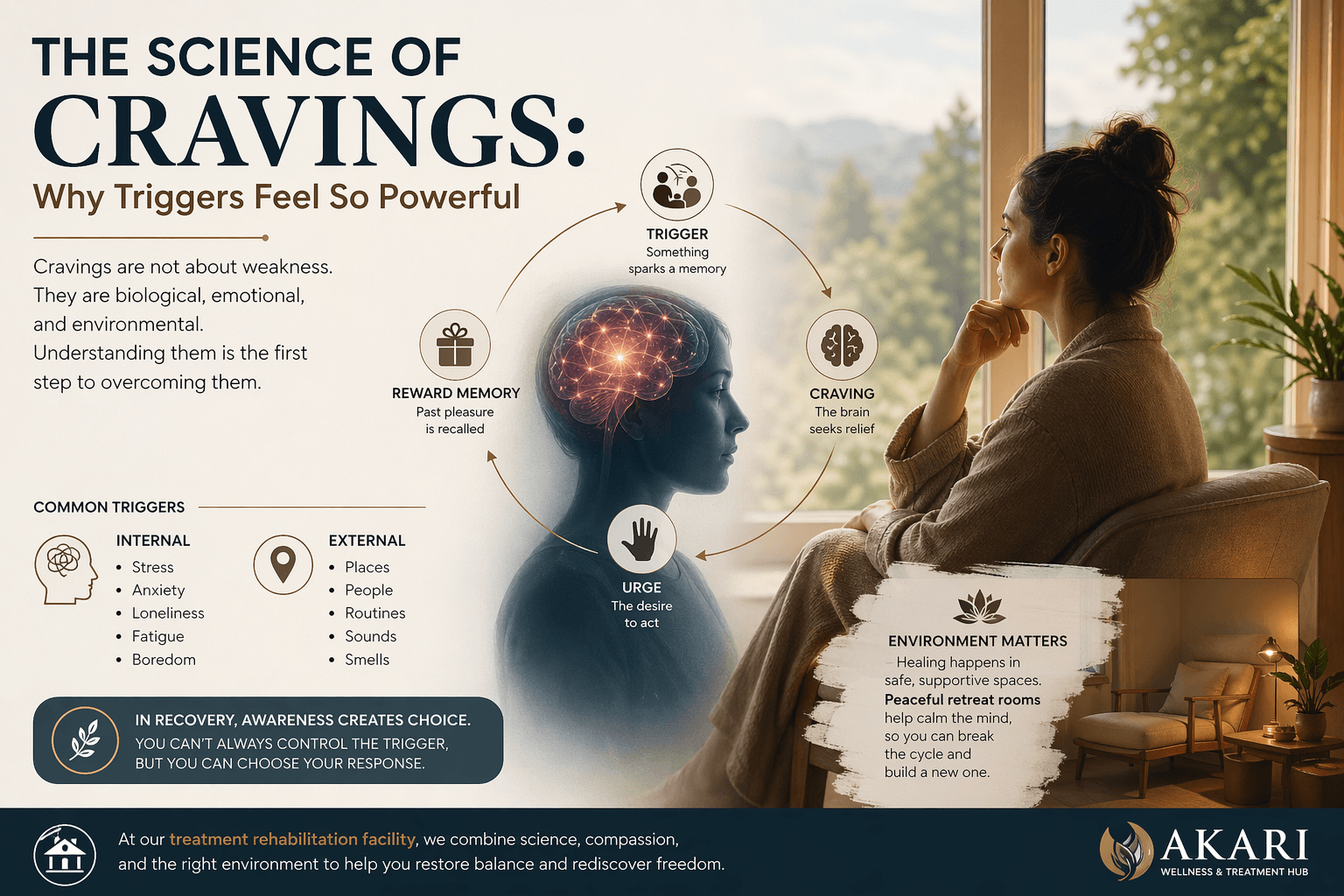
Triggers activate memory pathways in the brain. When you encounter one, your brain recalls the past experience and the “reward” tied to it.
This creates a powerful loop:
- Trigger appears
- Brain recalls past pleasure
- Craving intensifies
- Urge to act increases
Even after stopping the behavior, these pathways don’t disappear immediately. That’s why cravings can feel sudden and intense, even after long periods of progress.
Internal vs External Triggers
Understanding your triggers helps reduce their power.
Internal Triggers
These come from within and are often emotional or mental states:
- Stress or anxiety
- Loneliness
- Fatigue
- Boredom
External Triggers
These come from your environment:
- Certain places or locations
- Specific people or social settings
- Sounds, smells, or routines tied to past habits
Both types can activate cravings, but awareness allows you to respond instead of react.
Start Your Journey to True Wellness Today!
Join our healing community for expert tips, mental health insights, and wellness inspiration. Sign up now for a calmer, healthier you!
The Role of Environment in Recovery
Your surroundings play a major role in how you experience and manage cravings.
A structured and supportive environment, like a treatment rehabilitation facility, helps reduce exposure to triggers while teaching healthier coping strategies.
Spaces designed for healing, including peaceful retreat rooms, can make a significant difference. Calm, private environments help regulate the nervous system, allowing individuals to process urges without feeling overwhelmed.
Instead of reacting impulsively, individuals learn to pause, observe, and choose a different response.
Rewiring the Brain
The brain is adaptable. This is known as neuroplasticity.
With consistent support, new habits begin to form:
- Healthy routines replace destructive patterns
- Emotional regulation improves
- Triggers lose their intensity over time
Recovery is not about eliminating cravings overnight. It’s about reducing their power and building the ability to respond differently.
Practical Ways to Manage Cravings
While professional support is essential, there are simple techniques that can help in the moment:
- Pause and observe the craving without acting on it
- Change your environment if possible
- Engage your body, such as walking or stretching
- Talk to someone who understands your journey
- Delay the urge, even by a few minutes
Cravings often peak and pass. Learning to ride that wave is a key part of recovery.
A Different Approach to Healing
At Akari Wellness and Treatment Hub, recovery is approached with both clinical understanding and human connection.
Rather than forcing control, the focus is on:
- Understanding the root of cravings
- Creating safe and supportive environments
- Guiding individuals at their own pace
Healing happens more effectively in a space where you feel secure, respected, and understood.
Final Thoughts
Cravings are powerful, but they are not permanent. They are signals, not commands.
With the right support system, environment, and understanding, you can learn to face triggers without being controlled by them.
Recovery is not about perfection. It’s about progress, awareness, and choosing a different path, one step at a time.