
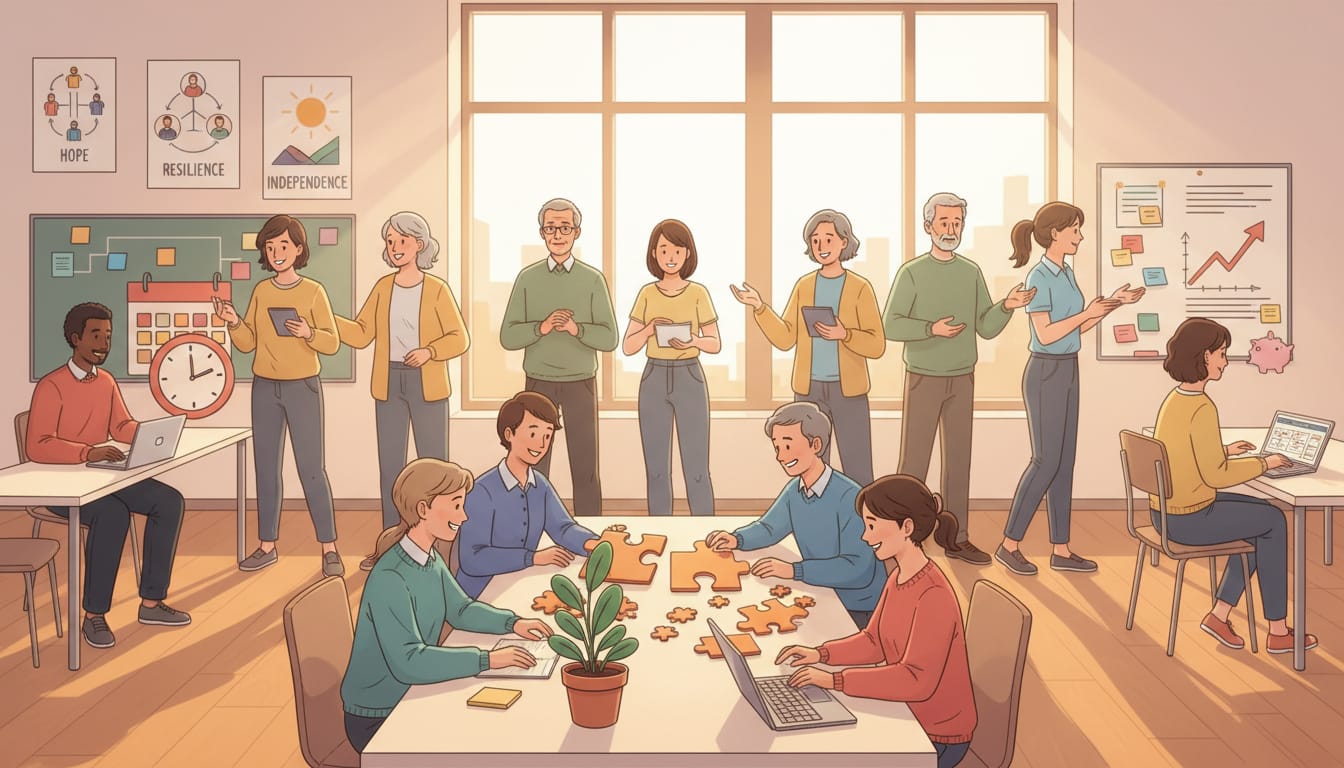
In the journey toward sustainable recovery, especially for individuals facing mental health challenges, addiction, or life disruptions, life skills training plays a pivotal role. These programs equip participants with practical tools to navigate daily challenges, build resilience, and regain independence, forming a cornerstone of Psychosocial Rehabilitation efforts.
Understanding Life Skills Programs
A life skills program focuses on equipping individuals with essential capabilities such as problem-solving, emotional regulation, effective communication, financial literacy, and time management. These skills are not only practical for daily living but also foster self-confidence, autonomy, and social inclusion key outcomes in sustainable recovery.
Integrating life skills training into recovery ensures that individuals are not only treated for immediate challenges but are also prepared for long-term stability. This approach aligns closely with Psychosocial Rehabilitation, which emphasizes holistic development of cognitive, emotional, and social abilities.
How Life Skills Training Supports Sustainable Recovery
- Empowers Independence
Learning to manage finances, organize daily tasks, and make informed decisions gives participants a sense of control over their lives. - Enhances Social Functioning
Communication and interpersonal skills foster stronger relationships with family, peers, and community, reducing isolation and promoting integration. - Strengthens Emotional Resilience
Techniques for stress management, coping with setbacks, and problem-solving help participants navigate life’s challenges without relapsing into old patterns. - Promotes Long-Term Health and Wellbeing
Life skills programs encourage healthy habits, routine establishment, and self-care, essential for maintaining mental and physical wellness.
Start Your Journey to True Wellness Today!
Join our healing community for expert tips, mental health insights, and wellness inspiration. Sign up now for a calmer, healthier you!
Integrating Life Skills into Psychosocial Rehabilitation
Psychosocial Rehabilitation (PSR) focuses on enabling individuals to live fulfilling lives despite mental health conditions or past traumas. By embedding life skills training into PSR, practitioners ensure recovery is sustainable and not limited to clinical improvement. The integration encourages a structured, supportive environment where participants can apply their skills in real-world scenarios, increasing success rates and quality of life.
FAQs
Q1: What is a life skills program?
A life skills program is a structured training that teaches essential skills such as communication, problem-solving, and emotional regulation to help individuals thrive independently.
Q2: How does life skills training relate to Psychosocial Rehabilitation?
Life skills training is often a core component of Psychosocial Rehabilitation, helping individuals apply coping strategies, manage daily activities, and build social connections for long-term recovery.
Q3: Who can benefit from life skills programs?
Individuals recovering from mental health challenges, addiction, trauma, or life disruptions can all benefit from these programs. They support independence, confidence, and sustainable recovery.
Q4: Are life skills programs only for adults?
No, life skills programs can be adapted for adolescents, adults, and even seniors, tailored to meet age-specific developmental and social needs.
Q5: How do life skills programs improve recovery outcomes?
By fostering independence, social functioning, and emotional resilience, life skills programs reduce relapse risk and help individuals maintain a higher quality of life post-rehabilitation.
Life skills training is more than a supplementary tool it is essential for sustainable recovery. By integrating life skills programs within Psychosocial Rehabilitation, individuals are empowered to rebuild their lives, improve social participation, and maintain long-term wellbeing.