
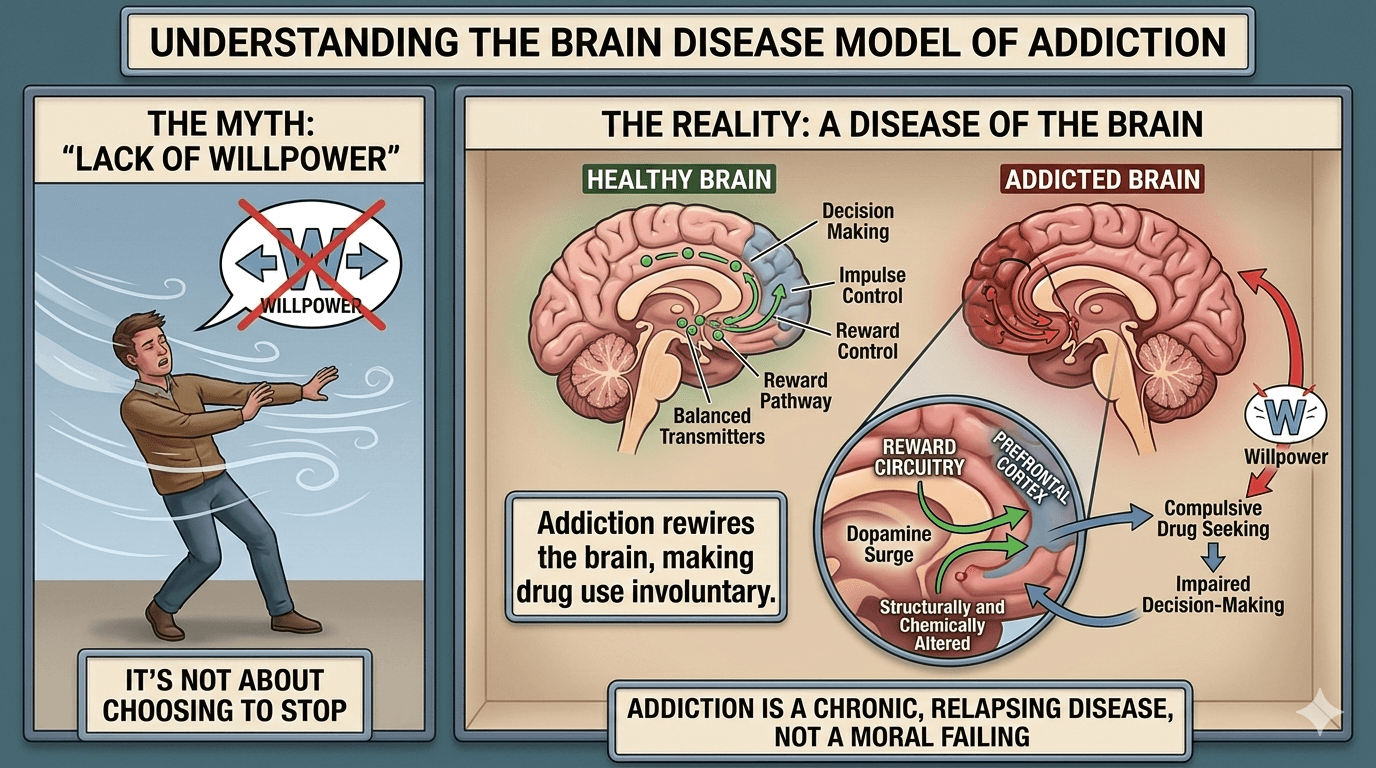
For decades, addiction was viewed as a personal failure a lack of discipline, weak character, or poor choices. Today, neuroscience tells a very different story.
Addiction is not about willpower. It is a chronic brain disease that changes how the brain functions, particularly in areas responsible for reward, motivation, memory, and decision-making.
Understanding this shift is critical not only for those struggling with substance use, but also for families, employers, and communities who want to offer meaningful support instead of judgment.
The Brain Science Behind Addiction
When someone uses addictive substances, the brain releases large amounts of dopamine a neurotransmitter responsible for pleasure and reward. Over time:
- The brain becomes less sensitive to natural rewards.
- Cravings become stronger and more frequent.
- Self-control and decision-making weaken.
- Stress triggers relapse more easily.
These changes are not simply “bad habits.” They are measurable alterations in brain circuitry.
Just like diabetes affects insulin regulation or heart disease affects blood flow, addiction affects neural pathways tied to impulse control and reward processing.
Why Willpower Alone Isn’t Enough
If addiction were purely about willpower, people could simply stop when consequences appear. But addiction:
- Hijacks survival mechanisms.
- Rewires stress responses.
- Impairs rational decision-making.
- Creates powerful physical and psychological dependence.
Many individuals desperately want to stop but struggle because their brain chemistry is working against them.
That’s why effective treatment must go beyond motivation. It must address biological, psychological, and environmental factors.
Start Your Journey to True Wellness Today!
Join our healing community for expert tips, mental health insights, and wellness inspiration. Sign up now for a calmer, healthier you!
The Importance of Long-Term Treatment
Addiction is a chronic condition. Short-term detox alone is rarely enough to create sustainable recovery.
Research shows that longer treatment durations lead to better outcomes. A structured 30 months treatment program allows individuals to:
- Stabilize brain chemistry.
- Build coping mechanisms.
- Address underlying trauma.
- Rebuild healthy routines.
- Strengthen support systems.
Recovery is not an event, it’s a process.
Just as chronic illnesses require ongoing management, addiction recovery benefits from long-term care and structured support.
Breaking the Stigma
Labeling addiction as a moral failure increases shame and discourages people from seeking help.
When we understand addiction as a brain disease:
- We replace blame with compassion.
- We prioritize evidence-based care.
- We focus on healing instead of punishment.
- We support long-term recovery instead of quick fixes.
Stigma isolates people. Education reconnects them.
What Effective Treatment Should Include
A science-based recovery program often combines:
- Medical supervision and detox support
- Behavioral therapy
- Trauma-informed care
- Relapse prevention strategies
- Family counseling
- Life skills development
The goal is not just sobriety, it’s sustainable transformation.
Why Akari Is Different
At Akari, recovery is approached with depth, patience, and long-term vision.
Instead of short-term stabilization alone, Akari focuses on:
- Comprehensive, individualized treatment plans
- Extended recovery pathways, including structured long-term programs
- Holistic healing that addresses mind, body, and emotional well-being
- Trauma-informed, compassionate care
- Ongoing support beyond initial treatment phases
By recognizing addiction as a complex brain condition rather than a personal flaw, Akari creates an environment where real healing can take place free from judgment and focused on sustainable recovery.