
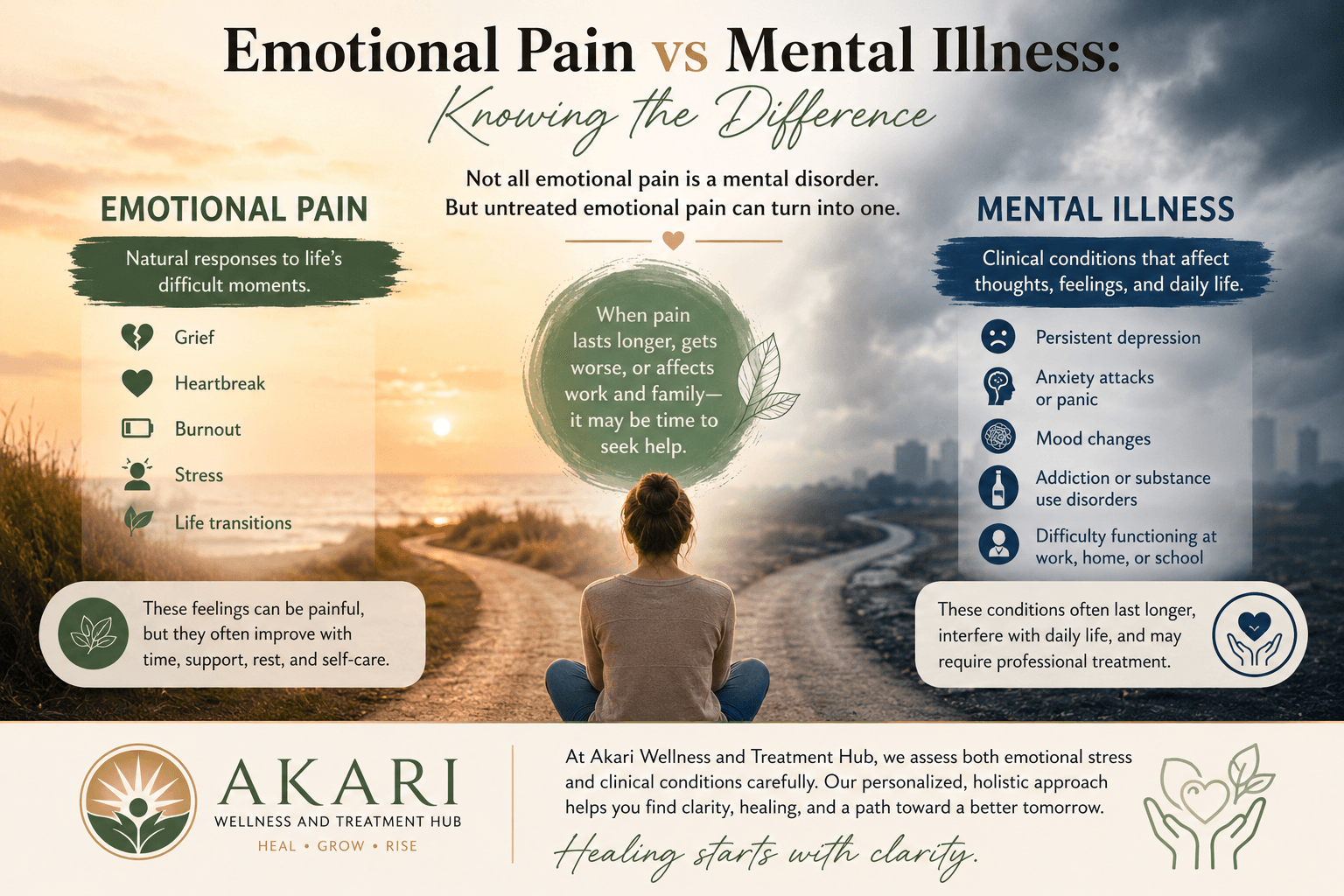
Emotional pain is part of being human. Loss, heartbreak, disappointment, stress, family conflict, burnout, and major life transitions can all leave a person feeling overwhelmed. These experiences can be deeply painful, but they are not always signs of a mental disorder.
At the same time, emotional pain should never be ignored. When distress lasts too long, becomes heavier over time, or begins to affect work, relationships, sleep, health, or daily responsibilities, it may be a sign that professional support is needed.
Understanding the difference between emotional pain and mental illness is not about labeling people. It is about giving the right kind of care at the right time.
At Akari Wellness and Treatment Hub, healing begins with clarity. We carefully assess both emotional stress and clinical mental health conditions so each person receives care that fits their real experience, not just their symptoms.
What Is Emotional Pain?
Emotional pain is the inner suffering that comes from difficult life experiences. It may appear after a breakup, the death of a loved one, a stressful job, family pressure, financial problems, trauma, failure, rejection, or major change.
Emotional pain can feel heavy, confusing, and exhausting. A person may cry more often, lose motivation, feel irritable, withdraw from others, or struggle to focus. These reactions can be natural responses to painful situations.
Common examples of emotional pain include:
- Grief after losing someone important
- Heartbreak after a relationship ends
- Burnout from long-term stress or pressure
- Sadness after disappointment or failure
- Emotional exhaustion from caregiving or family conflict
- Stress after a major life transition
Emotional pain does not mean someone is weak. It means something inside them needs attention, compassion, and support.
What Is Mental Illness?
Mental illness, also called a mental health condition, involves symptoms that are more persistent, intense, or disruptive than ordinary emotional distress. These symptoms may affect how a person thinks, feels, behaves, relates to others, and manages daily life.
Mental health conditions can include depression, anxiety disorders, panic disorder, substance use disorders, trauma-related conditions, bipolar disorder, and other clinical concerns. These conditions are not simply “bad moods” or “overthinking.” They often require proper assessment, treatment, and ongoing support.
Signs that emotional distress may be connected to a mental health condition include:
- Persistent sadness or emptiness that does not improve
- Anxiety or panic attacks that interfere with normal activities
- Loss of interest in life, relationships, or responsibilities
- Difficulty sleeping or sleeping too much for long periods
- Strong mood changes that affect family, work, or relationships
- Substance use that becomes difficult to control
- Isolation, hopelessness, or emotional numbness
- Trouble functioning at school, work, or home
Mental illness is not a character flaw. It is a health concern that deserves care, dignity, and professional attention.
Emotional Pain vs Mental Illness: The Key Difference
The main difference between emotional pain and mental illness is not always the feeling itself. It is often the duration, intensity, pattern, and impact of the symptoms.
Emotional pain usually has a clear connection to a life event. It may come in waves, improve with time, and become easier to manage with rest, support, reflection, and healthy coping strategies.
Mental illness may last longer, become more intense, or continue even when the original situation has changed. It may also interfere with everyday functioning in a serious way.
Emotional Pain May Look Like This
A person grieving a loss may feel sad, tired, and emotionally sensitive. They may cry often or need time away from social activities. But over time, with support and space to process the loss, they slowly begin to function again.
A person experiencing burnout may feel drained and disconnected. With rest, boundaries, lifestyle changes, and support, their energy may gradually return.
Mental Illness May Look Like This
A person with depression may feel low for weeks or months, lose interest in things they once enjoyed, struggle to complete daily tasks, and feel unable to return to their usual rhythm.
A person with an anxiety disorder may experience fear or worry that does not go away, even when there is no immediate danger. The anxiety may affect work, relationships, sleep, or the ability to leave the house or face certain situations.
A person struggling with addiction may continue using alcohol or drugs even when it damages their health, family, career, or sense of self.
The difference matters because the right support depends on what is truly happening beneath the surface.
When Emotional Pain Can Become Something More Serious
Not all emotional pain becomes a mental health condition. Many people heal with time, connection, faith, self-care, therapy, rest, or meaningful support.
However, untreated emotional pain can grow heavier when it is ignored, minimized, or carried alone for too long. Pain that is not processed may turn into chronic stress, unhealthy coping behaviors, relationship problems, addiction, anxiety, or depression.
This is why early support matters.
Seeking help does not mean something is “wrong” with you. It means you are choosing to understand yourself before the pain becomes harder to manage.
Signs It May Be Time to Seek Help
It may be time to speak with a professional when emotional pain:
- Lasts longer than expected
- Gets worse instead of better
- Affects work, school, or family life
- Causes ongoing sleep or appetite changes
- Leads to isolation or emotional shutdown
- Creates conflict in relationships
- Triggers panic, intense fear, or loss of control
- Leads to alcohol or drug dependency
- Makes daily responsibilities feel unmanageable
You do not need to wait until life falls apart before asking for help. Support is most effective when it begins early.
Why Clarity Matters in Healing
Many people suffer longer than necessary because they are unsure what they are experiencing. They may tell themselves, “I should be over this by now,” or “Other people have it worse,” or “I just need to be stronger.”
But healing does not begin with shame. Healing begins with understanding.
Clarity helps answer important questions:
- Is this emotional pain from a recent experience?
- Has this distress lasted longer than expected?
- Is it affecting daily life?
- Are there signs of depression, anxiety, trauma, or addiction?
- What kind of support would help most right now?
Without clarity, people may receive the wrong kind of help or delay care altogether. With the right assessment, the path forward becomes more compassionate, focused, and effective.
How Akari Wellness and Treatment Hub Helps
At Akari Wellness and Treatment Hub, we understand that every person carries a unique story. Emotional pain, family experiences, personal values, addiction, stress, trauma, and mental health challenges are never the same for everyone.
That is why care should never be one-size-fits-all.
Akari provides a private, supportive, and holistic environment where individuals can slow down, be heard, and begin rebuilding their lives with dignity. Our approach looks at the whole person, not just the symptoms.
We carefully assess both emotional stress and clinical conditions so we can better understand what each person truly needs. This may include support for mental health concerns, addiction recovery, counseling, therapy, relapse prevention, aftercare, and personalized treatment planning.
At Akari, we do not begin with judgment. We begin by listening.
Start Your Journey to True Wellness Today!
Join our healing community for expert tips, mental health insights, and wellness inspiration. Sign up now for a calmer, healthier you!
Emotional Pain Deserves Care Too
One of the most common mistakes people make is believing they only deserve help if their pain is “serious enough.”
But emotional pain matters.
You do not need a diagnosis to deserve support. You do not need to reach a breaking point before speaking with someone. You do not need to explain away your exhaustion, grief, anxiety, or sadness.
Sometimes, the healthiest step is simply saying, “I need help understanding what I am feeling.”
That moment of honesty can become the beginning of healing.
Mental Health Conditions Are Treatable
If emotional pain has developed into depression, anxiety, addiction, or another mental health condition, there is still hope. With proper care, many people regain stability, rebuild relationships, restore confidence, and create healthier ways of living.
Treatment may involve therapy, structured support, lifestyle changes, family involvement, recovery planning, medical guidance, or integrated care for co-occurring addiction and mental health concerns.
No one should have to face emotional or mental health struggles alone.
Healing Starts With Clarity
The difference between emotional pain and mental illness is not always easy to see from the inside. When you are hurting, everything can feel blurred. You may not know whether you need rest, therapy, treatment, recovery support, or simply someone who can help you make sense of what is happening.
That is why assessment matters.
At Akari Wellness and Treatment Hub, we help individuals and families understand the difference between emotional stress and clinical mental health conditions. From there, healing becomes more personal, more focused, and more hopeful.
You are not your pain.
You are not your diagnosis.
You are a person with a story, and that story deserves care.
Frequently Asked Questions
Is emotional pain the same as mental illness?
No. Emotional pain is often a natural response to difficult experiences such as grief, heartbreak, stress, or burnout. Mental illness involves symptoms that are more persistent, intense, or disruptive to daily life.
Can emotional pain turn into a mental health condition?
Yes, it can. When emotional pain is ignored, untreated, or prolonged, it may contribute to depression, anxiety, addiction, or other mental health concerns.
When should I seek professional help?
You should consider seeking help when emotional pain lasts longer than expected, gets worse, affects work or relationships, causes panic or depression, or leads to unhealthy coping behaviors such as substance use.
Do I need a diagnosis to ask for support?
No. You do not need a diagnosis to seek help. If you are struggling emotionally, speaking with a professional can help you understand what you are experiencing and what kind of care may help.
How does Akari Wellness and Treatment Hub support mental health and emotional healing?
Akari provides personalized, holistic care that may include assessment, counseling, therapy, addiction recovery support, relapse prevention, aftercare, and integrated treatment for emotional and clinical concerns.